Showing posts with label memoir. Show all posts

Monday, August 3, 2020

Mailbox Monday - Aug 3


Mailbox Monday is a meme started by Marcia of To Be Continued. Mailbox Monday is the gathering place for readers to share the books that came in their mailbox during the last week. It now has a permanent home at the Mailbox Monday blog.

Welcome to August. Our month came in like a lion with storms and a tornado warning. Some areas had storm damage, but not as bad as it could have been. Looks like a sunny week with a few scattered thunderstorms.

Not a very productive week, but I did get some reading done and harvested a few vegetables. I have also been binge watching Fuller House.

We started a weekly Zoom Bible study on Sunday. I've missed attending church services. Many places are still holding online services. Facebook Live and Zoom are nice, but they aren't like seeing people. I pray we can get back to in-person services soon.

My physical mailbox held one treat this week.


I also grabbed these Kindle freebies.


What presents did your mailbox hold? What is one thing you've been missing during the pandemic? How are you coping?

Monday, February 11, 2019

Mailbox Monday - Feb 11


Mailbox Monday is a meme started by Marcia of To Be Continued. Mailbox Monday is the gathering place for readers to share the books that came in their mailbox during the last week. It now has a permanent home at the Mailbox Monday blog.

We are somehow at Monday again. It was a rough week around here. We lost our oldest cat. He's been with us for over 14 years.


Killer, A.K.A. Miller, was the sweetest cat. He would greet you in the morning and hang out around the bathtub at night when I would read. He loved catnip. He was also such a great daddy to Giggles (above) when we brought her home from the shelter. She's been a bit lost without him.

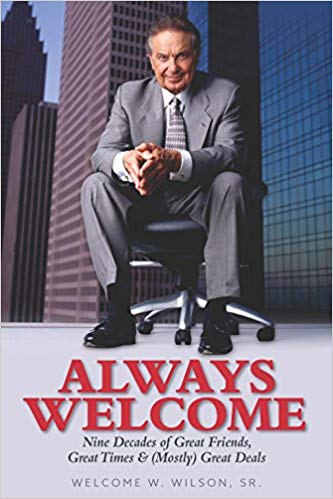
In my book world, there has been a lot going on. I just finished a great book yesterday. If you like reading about business men, Houston, or books about partnerships and friendships, this is a good read. 


Between Kindle freebies and books I've requested or ordered, the mailbox has been busy.

I bought these ones:


These two are review requests:


Then I picked up a couple freebies.


I'm reading one of The Daughter's of the Mayflower books right now. Hopefully I can get it done as I don't get too far behind on reviews.

Hope you have a blessed week.


Monday, December 11, 2017

Mailbox Monday - Dec 11


Mailbox Monday is a meme started by Marcia of To Be Continued. Mailbox Monday is the gathering place for readers to share the books that came in their mailbox during the last week. It now has a permanent home at the Mailbox Monday blog.

Warning: Mailbox Monday can lead to envy, toppling TBR piles, and humongous wish lists.

Happy Monday! I've been a busy little bee since we were last here. Christmas decorations are finally making their way through the house and the exterior is done. I'm excited to say that I wrote a new children's picture book last Monday at writing group. It's an idea I've had for a couple of years, but couldn't figure out how to bring it to fruition until now. I also had a slew of appointments last week.  More are coming this week, but after that it should hopefully slow down for a week or so. I'm looking forward to a bit of down time. I've busted my tail this year.

As far as my mailbox is concerned, there are more cards and packages in there than books these days. I did, however, grab this book I've wanted for a while but waited until Cyber Monday deals to pick up.


Brilliantly evoking the long-vanished world of masters and servants, Margaret Powell's classic memoir of her time in service is the remarkable true story of an indomitable woman who, though she served in the great houses of England, never stopped aiming high.

Brilliantly evoking the long-vanished world of masters and servants portrayed in Downton Abbey and Upstairs, Downstairs, Margaret Powell's classic memoir of her time in service, Below Stairs, is the remarkable true story of an indomitable woman who, though she served in the great houses of England, never stopped aiming high. Powell first arrived at the servants' entrance of one of those great houses in the 1920s. As a kitchen maid - the lowest of the low - she entered an entirely new world; one of stoves to be blacked, vegetables to be scrubbed, mistresses to be appeased, and bootlaces to be ironed. Work started at 5:30am and went on until after dark. It was a far cry from her childhood on the beaches of Hove, where money and food were scarce, but warmth and laughter never were. Yet from the gentleman with a penchant for stroking the housemaids' curlers, to raucous tea-dances with errand boys, to the heartbreaking story of Agnes the pregnant under-parlormaid, fired for being seduced by her mistress's nephew, Margaret's tales of her time in service are told with wit, warmth, and a sharp eye for the prejudices of her situation. Margaret Powell's true story of a life spent in service is a fascinating "downstairs" portrait of the glittering, long-gone worlds behind the closed doors of Downton Abbey and 165 Eaton Place.

I truly miss Downton Abbey and the history lover in me will enjoy digging into this one.

What was in your mailbox? Hope you have a blessed week.


Friday, February 17, 2017

Coming in April: Big Red by Ellie Dias


Letting go of stuff can be harder than you'd think...even when it’s jammed into a suitcase the size and color of a fire engine.


Seeking to experience simplicity and contentment in the “Happiest Place on Earth,” Dias planned her trip of a lifetime to the Himalayas to the nth degree.

Little did she know that nearly every step would be fraught with challenges, mishaps, and detours. Everything that could go wrong on her spiritual journey did. It was a fiasco that left her wondering whether the Universe—via her Big Red Suitcase—was trying to teach her something.


Ellie Dias, a devotee of Buddhist philosophy, introspection, and yoga, has a graduate degree in Education with a concentration in biology. Her career has been focused on health and wellness as a pediatric nurse, clinician working with families whose babies were at risk for SIDS, a division Vice President of a women’s health care company and a professor. Teaching Anatomy and Physiology, she merged her understanding of the human body with her sixteen-year practice of meditation, incorporating it in a classroom setting.

Writing a book had been percolating in the back of Ellie’s mind, but life got in the way until she was inspired by a solo journey to the Himalayas. Her debut book, Big Red: How I Learned Simplicity from a Suitcase, is a story of challenges, perseverance and humor as she struggles to jettison her Western ways halfway around the world while lugging a 95-pound suitcase—full of what she is convinced are the bare necessities. Common sense should have told her how completely inappropriate all of her “must-haves” were for spending three and a half weeks in the farmlands of Bhutan, Nepal, Tibet, and the Nepalese jungle.

Ellie participates in a book club, writing critique group, and is a member of Sisters in Crime. An artist of water color and pastels, she lives with her husband Ron and dog Roxie in Wilbraham, Massachusetts. She has two children, Michael and Michele and two beautiful grandchildren Aidan and Sebastian Dias. She is currently writing her first novel.


Visit Ellie online at http://elliedias.com/

Thursday, June 9, 2016

Let’s Start Talking About It by Debra Whittam, Author of Am I Going To Be Okay? Weathering the Storms of Mental Illness, Addiction and Grief


Title: Am I Going To Be Okay? Weathering the Storms of Mental Illness, Addiction and Grief

Author: Debra Whittam

Publisher: Turning Point International

Pages: 253

Genre: Memoir/Women’s Psychology/Applied Psychology

Am I Going To Be Okay? is an American story with a universal message. Ms. Whittam traces her history in the form of stories about her all too human, and sometimes unhinged family; she throws a rope to the little girl living there, and in adulthood, is able to pull her out to safety, bit by bit.

For More Information

  • Am I Going To Be Okay? Weathering the Storms of Mental Illness, Addiction and Grief is available at Amazon.
  • Pick up your copy at Barnes & Noble.
  • Discuss this book at PUYB Virtual Book Club at Goodreads.

Let's Start Talking About it by Debra Whittam

I am a first time author so, let’s starting talking about the two questions I am asked most often by nearly everyone concerning my having written a memoir/self-help book.  “How long did it take you to write the book?” and “Aren’t you worried about what family members will think?”

Really?  Are these questions that pertain to the author?  I think not.  What I sense is the people asking are only interested in the answer to see if THEY could do it.  So, let’s talk about this. 

How long did it take to write?  I wrote, on and off, for about three years.  The most difficult part was the edit, of course.  What I thought was going to be an easy, fairly simple week or two process to get my “shitty first draft,” as Anne LaMott calls it, to a final proof copy actually took six months.  Good thing my editor knew how to handle my impatience since she told me we would start going from the first draft to revisions.

Well, after the sixth ‘first’ draft I wanted to say ‘I’m done.’  But just in the nick of time she announced we were on to the revisions.  Ah yes, now we were getting somewhere!

After the revisions to the revisions, many times over, we moved on to the changes to the revisions.  We were now in month three.  Too late to turn back, yet, I hated the thought of reading one more word of what was once a beloved manuscript to me.  

Then, of course, we went from the changes to the changes to the changes.  Then finally, my friends, we were at the final manuscript!  Yea!  What joy. What bliss.  At final manuscript twelve I rebelled and said ‘NO!” 

This was just in time for the Final Proof copy.  The galley or advanced reader copy as it’s called.  Great.  After three final proof copies we have now officially gone to print! 

Oh my gosh.  How do people do this for a living?! 

So, do you see how my answering, to the unknowing questioner--it took three years to write the book--leaves me weak in the knees.  It’s not about me or what I went through. For heaven’s sake (!), it’s about them.  Of course it is. 

Question number two is more lengthy to explain, however, equally uninteresting to the one with the query.  Are they still listening as I explain that my first writing workshop was with Carol Henderson in Little Switzerland, NC where she explained to any of us thinking about writing creative non-fiction, memoir, to write as though everyone in the story has already died.  Or don’t do it at all.  That was a heady first bit of information for me as I already was sure I was the only who did not belong at the workshop.  I’m was a pretend ‘wanna be’ writer while everyone else was serious about it, better at it, etc. 

However, through the next three years of writing, I kept that thought firmly in the forefront of my mind as I traveled the road of writing; what I remembered, my perception of the things I saw, heard and how I was treated from littlehood onward.  

Is there any possibility that a family member will agree with my experience being true for them?  If, as they say, accuracy is based on perception, then every sibling in the same car having the same horrifying experience of riding with our drunk father at high rates of speed will invariably not have the same or even similar experiences as I did.  

We all have our own examples of being at the same dining room table with all the siblings and have a different narrative of what happened when someone spilled milk, triggering a major brawl which in turn lead to yelling, crying and sometimes people coming to blows.   

So do I answer to these random people, who I don’t even know, “Well, I can’t go to each person to make sure they are okay with it because blah, blah, blah.”   The person is already not listening.  No sibling, aunt, uncle, cousin would agree with what I had as my experience.  Parents would absolutely not agree.  So who ends up being the crazy one here?  And, how does anyone begin and end writing their memoir/ creative non-fiction narrative if they are, indeed, a Pleaser. 

Was and am I concerned with telling family stories that were always meant to be kept secret?  The point of my book is to see how insane it is to NOT talk about family member’s mental illness, their addictions, and the loss of a beloved through death or a relationship.  The impact on everyone in the family, especially the little ones watching the adults act like little monsters, is what creates the beginnings of chronic ‘IV drip’ of anxieties where little ones are sure of one of two things: either they did something wrong or there’s something wrong with them.  Those are the choices.  Silence and denial run the show and eventually become deadly in one form or another. 

So, my dear person with the questions, yes I considered everyone in the story.  Alive and not alive.  My experience is my truth.  If someone could have been in my shoes, at the same time, with the same experience, there might be a chance for some convergence of truth.  Doubt it, but maybe.  This memoir is a story of my life with my mom, entire family, but mainly her from my birth until her death, interwoven with the untreated mental illness, untreated addiction and unacknowledged grief that flows through everyone’s family tree.  We just don’t talk about it.  Any of it.  Until, of course, on someone’s death bed they sob out some essential bit of information that would’ve made everyone’s life different had they known it was NOT their fault.  Whatever ‘it' is. 

Answering these lame questions will become habit down the road and I will say, “Three years and, yes, I considered everyone.”  Let’s keep talking about it.

Debra Whittam is a licensed, practicing mental health therapist in Pittsburgh, Pennsylvania, who specializes in addiction, anxiety and depression, grief and loss. Whittam is passionate about her work in all areas of her specialties, especially addiction. Working in a detox unit for over three years before beginning her own private practice, Whittam realized, while counseling patients in the life and death arena of the detox unit, how much the loss of a beloved through death or a relationship impacted those struggling with addiction.

In this memoir, Whittam skillfully infuses her memories, stories and professional insights to remind us that the most important relationship we will ever have is with ourselves. She splits her time between Pittsburgh, Pennsylvania, the Adirondack Mountains in upstate New York and Paris, France. Am I Going To Be Okay? Weathering the Storms of Mental Illness, Addiction and Grief is her first book. 

Wednesday, November 25, 2015

Kindle Bargain: Baby Bumps by Amy Sprenger


From the author of the award-winning blog Snarky Mommy comes a book that will make every woman who has ever been pregnant pee with laughter (not that that’s hard). Wearing her highest heels and hottest pregnancy jeans, Amy Sprenger marches into her doctor’s office, beverage in hand, ready to finally see whether her baby is a boy or a girl. Sure, sure, this appointment is supposed to be about checking the health of the baby, but everyone who’s ever been there knows it’s really about looking for what lays, or doesn’t lay, between the legs. So when the doctor tells her she has an incompetent cervix, Amy becomes immediately offended on behalf of her reproductive organs. Is that just a politically correct way of saying her cervix sucks?

Unfortunately, as she’s soon to learn, it’s a lot more than that. The only way to keep that baby from falling out on the sidewalk (probably in front of Starbucks) is for her doctor to stitch her cervix closed and for Amy to stay in bed for the next four months. Four months that are carefully detailed in this “memoir.” A memoir that, while basically true, has been embellished with Amy’s signature brand of humor and hilarity.

With more time off than a castoff contestant on "The Bachelor," Amy takes pen to paper and settles in for the ride. But instead of sitting around eating bonbons, she’s popping hypertension drugs to stave off preterm labor. And complications? Oh, she’s got your complications. She’s gut-rehabbing her house. Her mother moves in to care for her. Her husband takes a “mancation” while she’s stuck in the hospital. And every time she has a contraction, she’s convinced it’s The Big One.

Living by the adage that laughter is the best medicine, Amy fumbles her way through a series of sometimes serious and usually embarrassing situations. And just to be clear, using a bedpan qualifies as both serious and embarrassing.

"Amy Sprenger's foray into factual fiction is a hilarious (and sometimes poignant) look at high-risk pregnancy from her view at the end of the bed. Sprenger offers a fresh and funny voice that readers will love!" -- New York Times bestselling author Jen Lancaster

File Size: 1950 KB
Print Length: 207 pages
Page Numbers Source ISBN: 1937349446
Simultaneous Device Usage: Unlimited
Publisher: Sheffield Publishing Group (September 2, 2015)
Publication Date: September 2, 2015
Sold by: Amazon Digital Services, Inc.
Language: English
ASIN: B014U5MJUE


Purchase here for only 99 cents!

Thursday, April 23, 2015

Book Spotlight: Czar Nicholas, The Toad, and Duck Soup by Elisabeth Amaral


The mid-1960s through the mid-1970s was a heady, turbulent time. There was a lot going on back then, and author Elisabeth Amaral was in the middle of it all: the fights for women’s rights, racial equality, a music revolution, be-ins, love-ins, riots in the streets, the rage against the Vietnam War, and sex, drugs, and rock and roll. It was an amazing time to be young.

In Czar Nicholas, The Toad, and Duck Soup, Amaral shares her recollections of those times. She and her husband gave up their jobs in New York City, relocated to Boston with their infant son because of mime, unexpectedly started a children’s boutique, and opened a popular restaurant in Harvard Square. Most of all it is a coming-of-age story about herself and her husband as they embarked on an improbable and moving journey of self-discovery.

With sincerity and humor, Czar Nicholas, The Toad, and Duck Soup offers a personal and revealing account that reaches out to those who find themselves striving to make a relationship work that, by its very nature, may be doomed. But this story is also one of friendship—and of finding the courage to move on.

Praise for Czar Nicholas, The Toad, and Duck Soup by Elisabeth Amaral

"A truly wonderful memoir that reads like great fiction. The characters come alive on the page." – Elizabeth Brundage, author of The Doctor's Wife and A Stranger Like You

“The story of how Liz Amaral and her husband became successful at the epicenter of counterculture businesses near Harvard Square / Cambridge from 1967-1975 with their boutique and restaurant is told with humor and insight. Swirling around them are all of the entrapments of the era, the drugs and free love and betrayal, as well as the politics that defined the times.

With a fierce dedication to her son and husband, Liz Amaral triumphs in this stunning memoir where she discovers that, while love isn’t always what we think it is, it remains, in all its multi-faceted transformations, the driving force of who we are and how we live our lives.” – P.B. O’Sullivan, writer and mathematician

“In her intimate and humorous memoir, Liz Amaral reveals the challenges of a young family establishing a home in Cambridge amid the tumult of the late 1960s. You will discover the disconcerting truth about her marriage and the painful path she takes to find herself again. A true adventure of the heart.” – Kathrin Seitz, writer, producer, and coach

Book Excerpt:

We shared everything, even our friends. But wait. What about those friends of his? Kind, gentlemen. Always womanless. Don’t even start to go there. Just don’t. It was easier to be in the immediate present, a member of our generation who shared the sentiments of the era, the sex-drugs-and-rock-and-roll era. The civil-rights and women’s- rights and anti-war and race-riot era. It was a thrilling time for youth. Along with our frustrations and fury at the government, we also shared an enormous sense of freedom and adventure, of this being our time. And if it was our time, that made it my time. My time to grab an afternoon lover, come home to nights of gentle affection, hug our kid, make supper, smoke some pot, and live happily. With luck, that might include ever after. Piece of cake, and it was no one’s fault.

Thoughts whizzed by. I grabbed onto some, because I knew I would need reminders.

This is my life, not a bad one at all. A very good one, in fact.

That was one thought. Here’s another: Look at me. Look at me! A sensual, sexual, twenty-something woman. A Scorpio. Married happily much of the time, except nighttime, the right time.

Purchase: Czar Nicholas, The Toad, and Duck Soup: A Memoir of Marriage, Mime, and Moving On


A native New Yorker, I have lived in the city for much of my life. My first jobs after graduating from NYU were jewelry design and case worker for the Departments of Welfare of New York City and Cambridge, Massachusetts. This was followed by co-ownership of a children’s boutique (Czar Nicholas and the Toad) and a restaurant (Duck Soup) in Cambridgenear Harvard Square. I then worked as an industrial purchasing agent in New Jersey, and for the last 25 years have been a real estate broker in Manhattan, accumulating stories of the wonder and madness that is this city. I published a book of short stories (When Any Kind of Love Will Do), wrote two children’s books and a memoir (Czar Nicholas, The Toad, and Duck Soup), and am currently working on a novel.

For More Information


Monday, March 9, 2015

Guest Blogger: Andra Watkins, Author of Not Without My Father


Can an epic adventure succeed without a hero?

Andra Watkins needed a wingman to help her become the first living person to walk the historic 444-mile Natchez Trace as the pioneers did. She planned to walk fifteen miles a day. For thirty-four days.

After striking out with everyone in her life, she was left with her disinterested eighty-year-old father. And his gas. The sleep apnea machine and self-scratching. Sharing a bathroom with a man whose gut obliterated his aim.

As Watkins trudged America’s forgotten highway, she lost herself in despair and pain. Nothing happened according to plan, and her tenuous connection to her father started to unravel. Through arguments and laughter, tears and fried chicken, they fought to rebuild their relationship before it was too late. In Not Without My Father: One Woman’s 444-Mile Walk of the Natchez Trace, Watkins invites readers to join her dysfunctional family adventure in a humorous and heartbreaking memoir that asks if one can really turn I wish I had into I’m glad I did.

For More Information


  • Not Without My Father: One Woman’s 444 Mile Walk of the Natchez Trace is available at Amazon.
  • Discuss this book at PUYB Virtual Book Club at Goodreads.

How I Almost Killed My Father
 by Andra Watkins

I never really liked my father. He was the classic 1960s dad: worked hard; came home and let everyone wait on him; let Mom handle all things kid-related; never talked to me.

When I turned thirteen, he decided to change his approach. He believed he hadn't taught me anything. His every sentence to thirteen-year-old me started with, "Andra, you need to learn....."

What thirteen-year-old girl would bond with that?

We shouted down my teens, harangued through my twenties and seethed away my thirties. I rolled my eyes every time I saw Dad's number on my caller ID. I couldn't send him to voicemail fast enough. He drove me MAD.

Then his appendix ruptured. He was seventy-seven. He died on the operating table. I only found out I almost lost him when I went to the hospital three days after they revived him. I was busy, after all. Chasing the mid-life dollar at the peak of my income potential. I didn't have time to drive two hours and sit in a dreary hospital room, couldn't afford to scrap a planned client trip. When I found out he almost died, I panicked.

I didn't know my father. At all.

Still, I couldn't imagine how we could fix our relationship. The pattern of dysfunctional communication was ingrained. Intense. Unalterable. He was almost eighty. Almost gone. I didn't know what to do, but spending time with him didn't change our dynamic.

When I decided to walk the 10,000-year-old Natchez Trace to launch my debut novel To Live Forever: An Afterlife Journey of Meriwether Lewis, Dad was the last person I wanted as wingman. Things between us were still off. I couldn't imagine living with my father for five weeks. I mean, I was forty-three years old. I lived on my own for more than two decades.

Sharing a hotel room with my eighty-year-old father? For five weeks? HELL ON EARTH.

His gas was legendary. He called it 'the paper mill.' He scratched himself all night while a sleep apnea machine breathed for him, and he wasn't fond of wearing clothes to cover his almost three-hundred-pound frame. Strangers loved his stories, but I plugged my ears through the five billionth telling.

For some reason, he agreed to accompany me on my journey. While I walked fifteen miles a day on the Natchez Trace, he explored tiny southern towns and regaled everyone with The Roy Show. Usually, he picked me up and dragged me to meet someone, forced me to sign books with sausage fingers and stand even longer on feet that looked like they'd been through a meat grinder. When he got so carried away with his own mystique that he forgot to pick me up, I hated him even more.

Spending five weeks with my dad was the stupidest idea I ever had.

Until it wasn't.

I wrote Not Without My Father: One Woman's 444-Mile Walk of the Natchez Trace to encourage everyone, everywhere, to Make a Memory. We all have family members we love to hate, but we'll still miss them when they're gone. They're family. They're part of us.

That's important.

It's never too late to Make a Memory........until it's too late. Think about someone who matters to you. What have you been meaning to do with them? How long have you been putting it off? Won't you regret it when all you can say is "I wish I had?"

Turn "I wish I had" into "I'm glad I did." Read Not Without My Father and be inspired to Make a Memory. Right now. Today. Because the memories you make are the pieces you'll have to cherish when that person is gone.

Andra Watkins lives in Charleston, South Carolina. A non-practicing CPA, she has a degree in accounting from Francis Marion University. She’s still mad at her mother for refusing to let her major in musical theater, because her mom was convinced she’d end up starring in porn films. In addition to her writing talent, Andra is an accomplished public speaker. Her acclaimed debut novel To Live Forever: An Afterlife Journey of Meriwether Lewis was published by Word Hermit Press in 2014.

For More Information


Tuesday, August 12, 2014

Waiting for Heaven Book Blitz - Win a $25 Amazon Gift Card

Title: Waiting for Heaven: Finding Beauty in the Pain and the Struggle
Author: Heather Gillis
Genre: Religion / Memoir / Spirituality
Publisher: WestBow Press
Publication Date: March 20, 2014
ISBN: 978-1-4908-2786-5

Life can sometimes lead us to unexpected places, to only leave us broken, desperate, and hurting. Heather Gillis and her husband, Mac, waited in anticipation for the birth of their third child. Like many Christian couples, their dreams and expectations in marriage, parenthood, and daily life developed differently than they’d planned, and left them grieving a life that would never be. Their journey gives insight into a new normal and uncovers the stepping stones of the healing process. In their process, they re- discovered God’s abounding love through their experiences of joy, heartbreak, and purpose. Heather reaches out to parents around the globe to speak openly about being a wife, mother, friend, relative, or stranger during life-changing trials and devastating struggles. In God’s love, she has found beauty in the midst of pain and struggle, as well as peace in His presence on Earth while waiting for Heaven.

Book Excerpt:
Life is not about how comfortable I can be; to expect life to be comfortable is unrealistic. I’m not exempt from the harshness or pain of this world. I have realized since Bowen’s passing that there are no guarantees in life; to think otherwise leads to disappointment. When I was pregnant, I assumed Bowen would be healthy. I assumed that when I left the house, I would return, unharmed. I assumed for some reason I would make it through life unscathed; I never thought I would be writing these words.

We can do all the right things in life, but that doesn’t guarantee us rewards or benefits in this life. We did not choose the path we are walking, but God willing, we will endure what comes our way and to where God wants us to go. We can have all the plans in the world but God is in the driver’s seat, and God knows what he is doing; we just have to trust him. Uncomfortable situations have taught me to trust in God, and I have learned more than I ever thought I would; and still am.

Purchase Book at:
Amazon: http://www.amazon.com/Waiting-Heaven-Finding-Beauty-Struggle/dp/1490827862

Barnes & Noble: http://www.barnesandnoble.com/w/waiting-for-heaven-heather-gillis/1119019515

Goodreads: https://www.goodreads.com/book/show/21809735-waiting-for-heaven

Meet Heather Gillis. In her book, Waiting for Heaven, Heather recalls the story of her infant son, Bowen, and her family's journey with polycystic kidney disease. Through Bowen's short life and death, she and her husband, Mac, discovered the true meaning of God’s love and grace. By telling her poignant story in the book and speaking to groups, Heather hopes she can help others through the challenges of loss and devastation; giving hope that their can be joy and happiness again.

After Bowen's death, Heather founded Bowen's Hope, a ministry serving kidney disease kids and their families, especially those getting dialysis treatments at Phoenix Children's Hospital. She's also involved with Camp Maska for dialysis patients in Arizona, and has raised over $50,000 for the PKD Foundation. In addition, Heather volunteers at the Ronald McDonald House, an organization serving meals and providing temporary housing to families with children in the hospital.

Heather works part time as a Certified Registered Nurse Anesthetist. She and Mac have two living children, Brooklyn and Blake. With a serving heart, Heather’s passions are her family and helping others.

Visit Heather online at www.bowenshope.com

Contact Heather at:


Contest Giveaway


Pump Up Your Book and Author Heather Gillis are teaming up to give away a $25 Amazon Gift Card!

Terms & Conditions:
  • By entering the giveaway, you are confirming you are at least 18 years old.
  • One winner will be chosen via Rafflecopter to receive the prize.
  • This giveaway begins August 1 and ends on August 29, 2014.
  • Winner will be contacted via email on September 1, 2014.
  • Winner has 72 hours to reply.
  • VOID WHERE PROHIBITED.
Good luck everyone!
ENTER TO WIN!

a Rafflecopter giveaway

Thursday, September 22, 2011

Guest Blogger: Chamed, Author of My Heart Stopped Beating

Fourteen year old Italian girl, Chamed, is a living miracle after fighting illness since birth to live a normal life. Now fourteen years old, she feels a thrill of freedom when she convinces her parents to let her stay home alone while they go on holiday. She soon regrets that decision when she receives a call from her aunt Patrizia that the worst has happened: her parents have died in a car accident.

Living with My Past by Chamed

Things only get worse for Chamed as she mourns the deaths of her parents and suffers under the care of her aunt and uncle. Her aunt repeatedly abuses her and convinces others that she is an evil child. When Chamed’s best friend’s father sexually harasses her, the blame is placed on Chamed. Deeply depressed, she attempts suicide, only to find herself waking up in a mental hospital. Her nightmare is only beginning as she is subjected to electroshock therapy against her will – and worse from the nurses and doctors.

Finally she finds hope again in Dr. Franco, but will he be enough to save her from this living nightmare?

A few years ago, I was thinking to myself about the destiny of the people who were in asylums before they closed, in Italy, at the end of the Eighties.

Where are they now? I was wondering. Those asylums, which still exist in other countries or under other names, are not usually places of cure, but of segregation.

What are the problems these people must face to integrate in our world?

I am now out of the madhouses but I have to live with my past. Day after day I must face my past. In the attempt of overcoming my past, once for all, one day I decided I would read the diaries I had written as a 14-year-old girl, and I would tell my story in a book. I have published my book this year, My Heart Stopped Beating (MindLeaves, second revised edition, August 2011).

In this book I tell the story of the time when I had fallen into an inferno of torture and abuse after my parents passed away. I was abused by my stepmother, and administered electroshock. I didn’t remember anything, they obscured my mind, I couldn’t read, I couldn’t even scribble and I encountered complications in relating my ideas to my way of expressing myself, in verbal language most of all.

Then for many years, for fear, I withdrew into myself and fought with my past.

I hope my book will help other people overcome an unbearable past. I think of my book as written for an ethical purpose. If the 'moral issue' might be given more importance, you may create, day after day, in every place and corner of the earth, the words, the big and small deeds that are the conditions for a better world. A world where everyone is given the opportunity to live a more human life.

At the end of the game what remains is only the love that has been given. I thank God for giving me four wonderful parents and I would not know who to choose among all four. The first two gave me a strong base of concrete and the other two have built on this basis, which with any storm doesn’t fall down, I believe.

It certainly can be damaged, ruined, but can never fall, and without their teaching I would not be here to tell my story. So many people of the asylums had incredible stories to tell, but the lack of real care for their world silenced their word forever.

I have written my book in the most authentic and honest way for me, putting in it all my heart and all of my life and reality. I wanted to keep my story essential, going straight to the heart of the matter.

I think of my book as a message in a bottle, as my diaries were. A bottle that now, with the English edition, has crossed the ocean, and reached a public that includes many people and many countries. In most of those countries many people are still imprisoned in asylums. I wish somehow my message could reach them, adding some hope, or at least awareness.


Chamed is not the registry office name of the author, yet it is not a pseudonym. She lives in Tuscany, she works mostly abroad, as a painter on canvas and porcelain. Some of her porcelain works are displayed in exhibitions in Italy, Sweden and Poland, France, Portugal and Brazil. My Heart Stopped Beating is her first novel. A second novel by her is forthcoming.


Tuesday, June 14, 2011

Book Spotlight: The River of Forgetting by Jane Rowan


People don’t make up things like that for fun.


That’s what Jane’s therapist tells her when Jane reports fragmentary memories from her childhood that hint at sexual abuse. A busy, successful scientist, Jane at first fights the implications, but finally has to admit that something indeed happened. With help from a gifted therapist as well as creative arts, Jane taps into her own aliveness and reconciles with both her parents’ love and their betrayal.

This deeply personal memoir invites the reader behind the closed doors of the therapist’s office and into the author’s journal and her very body. Jane’s tender story shows how we can use the challenges of painful childhood traumas to transform our lives.

Read the excerpt!

Chapter 1: Pandora’s Box

The memory emerged from a dim corner of my mind, jolting me awake. It was a humid morning in August. The air flowed softly through the bedroom window, bringing in a catbird’s song from the cherry tree just outside. I sat up in bed and propped a pillow behind me, grabbed my spiral-bound journal from its place on the bedside table, and began scribbling:
I am three or four and I hurt between my legs. I’m perched on the toilet in the big bathroom in our house at Shell Beach. The door is opposite me and the light streams in from the window on my right.


I feel the sting when I pee. My mother says that I slipped in the bathtub and fell on the bathtub rim. I have no memory of anything that caused the hurt, but I know I don’t believe her story of how it happened.

Fear sank claws into my stomach. I wondered what had happened and who had hurt me.

No way. Surely not. Not my father. I don’t know how to tell what’s true. I don’t want to make things up.

This was Revelation Day, the day that started me on a long journey into my past. How did it happen that a 52-year-old woman suddenly woke up to the possibility of long-ago abuse? What had kept the issues at bay so long? Why could the past now grab me by the throat?

Read the Reviews!

“A powerful and sensitive portrayal, full of insight into Jane’s own confusion as well as her family’s bewildering dynamics. The writing is by turns lyrical and gut-wrenching, angry and tender. This inspiring, important book shows that healing and joy are possible after childhood abuse.”

—Marilyn Van Derbur, author of the bestselling Miss America By Day

“A brave and inspirational book. Jane Rowan has made an important contribution to our understanding of child sexual abuse and healing, affirming that we can transform trauma into lives filled with peace and joy.”

—Ellen Bass, co-author of bestseller The Courage to Heal

“With astonishing bravery and eloquent voice, Jane Rowan explores what it is to be haunted by memories of childhood abuse so long and so deeply buried that you must fight to believe them true. Her work honors scars long hidden and offers hope for healing. Her book is a gift that dares to render clarity from childhood chaos.”

-Martin Moran, author of The Tricky Part

"Sharing with us the story through poetry, dreams and narration, we are taken upon a journey with a family that loves even though the horrors are long forgotten. As we all know, the truth always prevails and the strength and courage Jane Rowan shares with the reader will leave you heartbroken at times."

--One Day at a Time

Purchase The River of Forgetting at:

Jane's website: http://riverofforgetting.com/


Amazon: http://www.amazon.com/River-Forgetting-Memoir-Healing-Sexual/dp/0981583024/

Amazon Kindle: http://www.amazon.com/River-Forgetting-Memoir-Healing-ebook/dp/B004JN0XP6/

Barnes & Noble & Nook: http://search.barnesandnoble.com/The-River-of-Forgetting/Jane-Rowan/e/9780981583020/?itm=1&USRI=jane+rowan+river

Smashwords: http://www.smashwords.com/books/view/39190


Jane Rowan is a New England poet and writer. After teaching science for three decades in a private college, she retired to pursue the creative life. She has published numerous articles and the self-help booklet Caring for the Child Within—A Manual for Grownups, available through her website and through Amazon (Kindle). An excerpt from The River of Forgetting appeared in Women Reinvented: True Stories of Empowerment and Change. Visit Jane at www.janerowan.com and find out more about her memoir at www.riverofforgetting.com.

Monday, November 8, 2010

Author Spotlight: Dr. Richard A. Barrett and Tales from a Spanish Village

Dr. Barrett gets a sudden and unexpected break when a college professor offers him a grant to begin his fieldwork for his doctoral research. With all expenses paid, this young man sets off to understand the people of Benabarre, Spain, learning a few lessons about himself along the way.  His adventure begins with lively characters from the village and continues as he encounters gypsies, a deranged landlady, fine sherry and much more.

Read an Excerpt!

Chapter 4
Gypsies
There were no Gypsies in Benabarre when I lived there, and
itinerant Gypsies rarely visited the village. It is true that one
individual was sometimes described to me as a Gypsy or of Gypsy descent,
but this was whispered as an aside and it was clear that nobody referred
to him as a Gypsy to his face.
The term gitano (Gypsy) had a very negative ring. When residents
described others in unflattering terms they sometimes said the person
was muy gitano (very Gypsy). Or again, they might call the person un
gitano blanco (a white Gypsy). This simply meant that they considered the
person untrustworthy and dishonest. Or it could refer to the uncleanliness
that was also associated with Gypsies. I was once sitting with Isidro in
the plaza when an attractive, dark-complected maidservant passed by.
He generally tracked all of the young women visually but hardly noticed
this one. I was surprised, so to test the water I remarked, “Hey, you didn’t
see a pretty woman go by.”
“Who?”
“La Margarita.”
“Margarita! Pretty!? Are you out of your mind!? She’s horrible! The
worst of the village!”
“How can you say that?” I objected.
“Listen. That woman came into my shoe store the other day and when
she took off her shoes, she showed me two of the dirtiest patas (paws)
you ever saw, like the feet of a Gypsy!”
52 RICHARD A. BARRETT
The first time I saw Gypsies in Benabarre, I witnessed a remarkable
display of awe and apprehension on the part of the village children. I
happened to be gazing from my window to the plaza below when a Gypsy
woman and her two children came into view. The woman was wearing
an orange-and-white dress that hung on her loosely and the children wore
shabby clothing that looked inadequate
for the brisk spring day. They made a
sharp contrast to the neatly dressed
village children who were in the plaza
at the same time playing a ball-and-jacks
game on the sidewalk. When they
spotted the Gypsies they stopped
everything and stared. One of the little
boys stood up slowly and pressed his
back against the wall to give the Gypsies
very wide berth even though they were
passing at least four feet from the group.
As the Gypsies walked to the end of the
plaza, the children stared silently. Only
when they were out of sight did the
children begin talking animatedly
among themselves in the “Did you see
that? Did you see her dress?” mode.
Then one of the little girls got up and ran in the direction the Gypsies
had gone, presumably to watch them from afar.
Some months later I went to the neighboring village of Torres del
Obispo to conduct interviews. Benabarre’s veterinarian was a native son
of Torres and had introduced me to some of the leading figures there: the
doctor, the secretario and a lawyer-landholder. On this particular day I was
driving there to spend the morning with the lawyer. As I approached the
village, I passed a very large encampment of Gypsies, perhaps twenty or
more persons. They were traveling in two or three mule-drawn carriages
and had set up camp in a forested glen about two hundred meters from
the entrance to the community.
After spending two or three hours with the lawyer and his wife, I
departed sometime after noon and again passed the group of Gypsies,
then making preparations for the afternoon meal.
Looking down on the church
plaza from one of the
windows of my flat.
TALES FROM A SPANISH VILLAGE 53
I was scheduled to return to Torres del Obispo the following morning
to interview Señor Doz, the secretario of the village. My wife, Yuki, was
in Benabarre at the time, visiting me on one of her breaks from school
in Madrid. She decided to join me on the trip to Torres.
Doz was an interesting person. He was from a simple laboring
background and had no more than a high school education, yet he had
occupied the important post of secretario for over twenty years. He was
stolid, unassuming and deliberate in everything he did and recounted
events exactly as he saw them. These same qualities caused others to
underestimate him. A secretario in another village described Doz as “a
nice person, but not very bright.”
“Why do you say that?” I asked.
“Well, he’s such a payés (peasant) and so slow!”
I didn’t argue, but I disagreed. His farming background made him
accessible and easy for other villagers to deal with. He was perceptive,
informative, and entirely trustworthy. I judged an informant by a simple
standard: if I spent hours writing up notes after an interview, the informant
was worthwhile. If I found little to write, I had wasted my time. After a
conversation with Doz, I always wrote a great deal.
So when we drove back to Torres del Obispo the next day, I was
looking forward to a profitable session. I saw the same Gypsy carts come
into view as the day before. But as we passed the camp, we were astonished
to see three members of the Civil Guard standing with automatic weapons
at set intervals around the Gypsy camp. The Gypsies themselves were
seated on the ground in front of the guards in what appeared to me as
anxious and stony silence.
We drove into the central plaza, parked, and walked up the stairs of
the town hall. Señor Doz admitted us to his office and I saw right away
that he wished we didn’t have an appointment.
“Ricardo, there’s been an unfortunate incident with Gypsies here,
maybe it would be better if we talk some other time.”
“Of course,” I said. “If you’re busy we can wait until you’re done.
We’ll come back later.” I didn’t want to return to Benabarre without
accomplishing anything, so I told him we would remain in the village
until he was free.
“It’s not that I’m busy,” Doz said. “It’s just that this is a difficult matter.
The Civil Guard’s taking care of it, not me.”
54 RICHARD A. BARRETT
I wasn’t getting something. Señor Doz clearly did not want us there,
but it wasn’t because he couldn’t attend to us.
“What’s going on with the Gypsies?” I asked. “When we drove in we
saw guardias with weapons and all the Gypsies on the ground. It looked
menacing.”
“Two lambs and some chickens were found this morning with their necks
broken. The owners accused the Gypsies. They came and reported it to me
and I called the Civil Guard in Graus. They came right away and placed the
whole camp under arrest. That’s what you saw. They’re all under arrest.”
“How do you know the Gypsies did it? Did somebody see them?”
“No. Nobody saw it happen. But that doesn’t matter. Everybody
knows they did it. Something like this happens every time they come
here. Nothing like this happens in Torres for maybe a year or two. Then
come the Gypsies and right away there’s trouble. It never fails. If Gypsies
camp near the village, they cause trouble one way or another.”
“Were the Gypsies caught with the animals? Butchering them?” I asked.
“No, of course not! They’re too clever for that. They just left them
where they broke their necks.”
“But why would they do that? What good would that do them?”
“Because they hoped the animals would be thrown away. Spaniards
don’t eat dead meat, Gypsies do. So they would just be retrieving
something that was discarded anyway. Perfectly legal. But everybody sees
through that. They didn’t expect us to call the Civil Guard, but we did.”
As Señor Doz was talking I realized for the first time that there were
a number of men in the room next door. It soon became apparent that
Civil Guard officers were questioning, and threatening, at least two Gypsy
men in the adjoining room.
At that moment one of the officers, a captain I think, opened the
door and entered the office where we were sitting. He was surprised to
see Yuki and me and apologized for the interruption. He walked over to
retrieve a stick he had apparently left on Señor Doz’s desk. It was a thin
stick, about the size of a long pointer used in a classroom. He shut the
door behind him.
As voices were raised in the adjoining room it suddenly dawned on
me why Señor Doz had been hesitant to have us there. He wanted to spare
us from witnessing the disagreeable events that were about to unfold.
TALES FROM A SPANISH VILLAGE 55
From behind the door I heard the very loud and threatening voice of
one of the guardias; Listen you, this can break ribs, do you understand
me?!”
“No, no!”—a high-pitched wail from the Gypsy and then words I
couldn’t understand. The sounds were loud, anguished and frightening.
As we heard these cries I saw the blood drain from Doz’s face. In
five seconds he turned deathly pale. I had the sensation that the same
had happened to me. All of us were suddenly aware that we were about
to hear the sounds of a nasty beating. “I wanted to warn you,” Doz said,
“but there wasn’t time. I hope you’re ready.” I said nothing.
Oddly enough, I remember thinking that if the guardia was threatening
the man with the stick that he had taken from the office, it was far too
flimsy to break ribs. But I was alarmed, I did not want to be there, yet I
was frozen to my chair.
The voices reached a crescendo in the other room. I heard the Gypsy
yelling in a rushed and frightened voice and the guardia shouting even
louder. Then suddenly, everything stopped. There was no beating, or at
least none of the sounds of it that we could hear. The voices were lowered,
and we soon heard the muffled sounds of people leaving the room and
treading down stairs.
Señor Doz slumped in his chair, greatly relieved. I could see the color
returning to his face. He even managed a weak smile. I didn’t understand
how the matter had been resolved. “What happened?” I asked.
“One of them confessed. Well, he didn’t confess, but he accepted
responsibility. Said they would pay for the damage.”
“So threatening them was enough?”
“That did it. And I’m glad of that! Now let’s do the work you came
for. It’ll be a relief to think of something else!”
As we drove back to Benabarre that afternoon, I thought about the
intensity of the experience and about the many times I had seen the
same sort of thing in Hollywood films: a man beaten in a police station
or by the Mafia. Yet there was no comparison with this very real event.
When I heard the Gypsy pleading and saw Doz turn white in front of
me, my heart thumped like a drum. Yuki said she was just as frightened
as I was. A good lesson, I thought, in the difference between reality and
make-believe.
56 RICHARD A. BARRETT
The following day we learned that since there was no money in the
Gypsy camp, or not enough to pay for the damage, they were allowed to
telephone relatives in Barbastro. These drove up to Torres del Obispo the
same day and paid the indemnity. The amount was apparently arrived at
by asking the farmers to put a price on the lost animals. The camp was
kept under armed guard until the fine was paid. The guardias then forced
the entire group to break camp and leave the area.
In the next few days I discussed the episode with a number of my
friends in Benabarre. Everybody had heard of the incident though none
had seen it up close as I had. I found absolutely no sympathy for the
Gypsies. Even friends like Estéban who generally adopted an anti-Franco,
anti-government, anti-authority stance, had nothing but contempt for the
Gypsies and praise for the guardias. One of Estéban’s friends remarked,
“Fining them isn’t enough. They’ll just do it again. They should put all
those sons of bitches in jail!”
As always in such cases, I talked the matter over with Antonio. I told him
I still wondered why the Gypsies would commit such a transparent crime.
“But don’t you see? They did it in Torres because there’s no Civil
Guard there. They thought they could get away with it. They would
never try such a thing in Benabarre where there’s a cuartel (Civil Guard
barracks).”
“You mean that the peasants themselves couldn’t do anything?”
“Of course not. If they tried to argue with the Gypsies, they’d have the
whole camp against them. Gypsies carry knives. It would be dangerous.
But what the Gypsies didn’t count on was the telephone. Even isolated
people can call the police now. In the old days, the peasants would have
had to put up with it. Not anymore!”
The judgment against the Gypsies was not quite unanimous however.
When I recounted the episode to an intellectual friend in Huesca, she
sprang to the Gypsies’ defense. “How did the authorities exclude the
possibility that some disgruntled farmer in the village didn’t take revenge
on neighbors he didn’t like? He would know that the Gypsies would be
blamed as a matter of course. As you know, there are a lot of frictions in
those villages.”
TALES FROM A SPANISH VILLAGE 57
When I presented this scenario to friends in Benabarre, it was
dismissed out of hand. My most trusted elderly informant shook his
head resolutely. “Nobody in Torres would do such a thing! You might
not get along with all your neighbors and you might even hate some of
them. But nobody is going to kill healthy animals as a means of getting
revenge! Nobody!”
And that was that.

Not every anthropologist digs up fossils and bones or explores mysterious Roman ruins. Some, like Dr. Richard A. Barrett, achieve insight on cultures by immersing themselves completely in a region. That was the idea behind Tales from a Spanish Village ) the memoir of Dr. Barrett’s experience as a young doctoral student doing fieldwork in northern Spain.

Dr. Barrett was born in San Fernando, California. Throughout his childhood, he was interested in traveling and learning about other cultures. His childhood interest expanded to include his academic goals. Barrett graduated Summa Cum Laude in anthropology from the University of California in Los Angeles, where he was a member of the Phi Beta Kappa fraternity. Throughout his pursuit towards a higher education, Barrett was recognized for academic excellence. He was selected as recipient of the Woodrow Wilson Fellowship and as a fellow in the National Institute of Mental Health. He was awarded the Ford Foundation grant which funded his travels throughout Spain, and to further advance his studies in anthropology to an even greater degree.

After his time in Spain, Dr. Barrett taught cultural anthropology at Temple University and the University of New Mexico and wrote Benabarre: The Modernization of a Spanish Village, an analysis of the village he stayed in during his doctoral research. He also published Culture and Conduct: An Excursion in Anthropology.

In Tales from a Spanish Village, Barrett’s remarkable, true-life adventure begins when he receives a grant from his professor to finish research on his doctoral dissertation in Benabarre, Spain. The memoir details Barrett’s adjustments to student life in a small, peasant town and chronicles his encounters with various characters and customs. It also details a first-hand look at Spain ruled by the Franco dictatorship, when he witnessed those considered to be lower class treated harshly by the police.

Dr. Barrett currently resides in Santa Fe, New Mexico and Carpinteria, California with his wife, Dottie. He is retired and enjoys woodworking, fly fishing for trout and collecting twentieth century art. Barrett is also an active member of various art groups in Santa Fe, especially those that support contemporary art. For more information, please visit www.richardabarrett.com.