Wednesday, October 20, 2010

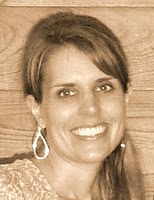
Guest Blogger: Dean DeLuke, Author of Shedrow

Today's special guest is Dean DeLuke, author of Shedrow.

From rolling pastures in Lexington, KY to darkened alleyways in Newark, NJ, from Manhattan’s posh ‘21’ Club to a peculiar and mysterious landfill in Eastern Kentucky, and from Saratoga Springs, NY to the tiny island of St. Lucia, Shedrow portrays a collision of characters from many divergent worlds. High society and the racing elite, medical and veterinary specialists, mob figures, and Kentucky hill folk become entangled in this unique twist on the medical thriller.

Dr. Anthony Gianni, a prominent Manhattan surgeon, becomes involved in a racing partnership as a diversion from a thriving surgical practice and an ailing marriage. The excitement builds when the partnership acquires Chiefly Endeavor, a two-year-old colt with the breeding, the spirit, and enough early racing success to qualify for the Kentucky Derby.

When a new partner with an unsavory background appears and a breeder’s nightmare becomes real, Dr. Gianni and a dedicated veterinarian must confront organized crime and solve a complex mystery that threatens to destroy both of their careers, and possibly a great deal more.

Believability in Fiction Writing: Write What You Know and Research the Rest! by Dean DeLuke

It is an old adage, perhaps even a cliché in fiction writing: write what you know. And while it certainly provides an author with a good starting point, there will always be a need for additional research, and that research will be a key factor in making the story believable, the characters real, and the plot an engaging one.

In the novel Shedrow, the principal character is a surgeon who becomes involved in a thoroughbred racing partnership as a diversion from a thriving practice and an ailing marriage. It was not a stretch for me to create true-to-life drama from the operating room and the racetrack. I have, after all, been a surgeon for nearly thirty years, and my experience with thoroughbred horses dates back to my high school and college years when I was a farm hand on a thoroughbred farm in upstate New York. More recently, I have been a partner with Dogwood Stable. So I had a long history of hands-on involvement at all levels.

That combined experience in the medical and racing arenas did not mean that I had no research to do—only that there would be less of it. For the research that I did perform, I used a variety of the standard techniques: site or field research, internet-based research, and one-on one interviews.

Most of my field research related to visiting sites I was already somewhat familiar with, in order to give my setting descriptions absolute authenticity. I wanted readers to be able to see, hear, feel, even smell the surroundings—whether on the backstretch at Saratoga or in the paddock at Gulfstream. So I would sit quietly and record what I experienced, from the smell of manure alongside the barn to the feel of a cooling mist carried by the wind from the fountains near the paddock at Gulfstream. The visual description is only one component; good writers always advise us to use as many of our five senses as possible throughout our story.

Of course, the internet has made the life of the writer infinitely easier. There are innumerable things that can be researched without ever leaving our computer screens: a myriad of facts and figures, even photographs or satellite views of settings, etc. The internet can augment but should never totally replace the other methods of research.

For some things, nothing can take the place of a face-to-face interview with a real expert or an insider. So for certain details about how a particular disease might present in horses, I asked a vet. And even though I had spent plenty of time around horses, I asked a real racing insider—one who had spent her entire lifetime with thoroughbreds—to read my story. She let me know where the potential shortcomings were.

A key point in writing believable fiction is to know where you don’t require any help, and where the story might be made better with some additional research. So in the case of my novel Shedrow, I knew I didn’t need anyone to tell me what it was like in an Operating Room. But I didn’t hesitate to ask a veterinarian or a horse trainer for assistance if I had an equine medicine question.

Despite our best efforts, there will undoubtedly be some instances where an author gets a particular detail or fact wrong. It happens even to the best authors, and when it does, one thing is certain: it may get by our editors, but our readers will surely let us know.


Dean M. DeLuke is the author of Shedrow, a new thriller dubbed a cross between Dick Francis and Robin Cook. He is an oral and maxillofacial surgeon, a graduate of St. Michael’s College, Columbia University (DMD) and Union Graduate College (MBA). Currently, he divides his time between the practice of oral and maxillofacial surgery and a variety of business consulting activities. You can read excerpts and reviews, view a book trailer and photo gallery, and see details of upcoming contest offerings at http://www.shedrow1.com/.


Tuesday, October 19, 2010

Guest Blogger: Dean DeLuke, Author of Shedrow

Today's special guest is Dean DeLuke, author of Shedrow.

From rolling pastures in Lexington, KY to darkened alleyways in Newark, NJ, from Manhattan’s posh ‘21’ Club to a peculiar and mysterious landfill in Eastern Kentucky, and from Saratoga Springs, NY to the tiny island of St. Lucia, Shedrow portrays a collision of characters from many divergent worlds. High society and the racing elite, medical and veterinary specialists, mob figures, and Kentucky hill folk become entangled in this unique twist on the medical thriller.

Dr. Anthony Gianni, a prominent Manhattan surgeon, becomes involved in a racing partnership as a diversion from a thriving surgical practice and an ailing marriage. The excitement builds when the partnership acquires Chiefly Endeavor, a two-year-old colt with the breeding, the spirit, and enough early racing success to qualify for the Kentucky Derby.

When a new partner with an unsavory background appears and a breeder’s nightmare becomes real, Dr. Gianni and a dedicated veterinarian must confront organized crime and solve a complex mystery that threatens to destroy both of their careers, and possibly a great deal more.

Believability in Fiction Writing: Write What You Know and Research the Rest! by Dean DeLuke

It is an old adage, perhaps even a cliché in fiction writing: write what you know. And while it certainly provides an author with a good starting point, there will always be a need for additional research, and that research will be a key factor in making the story believable, the characters real, and the plot an engaging one.

In the novel Shedrow, the principal character is a surgeon who becomes involved in a thoroughbred racing partnership as a diversion from a thriving practice and an ailing marriage. It was not a stretch for me to create true-to-life drama from the operating room and the racetrack. I have, after all, been a surgeon for nearly thirty years, and my experience with thoroughbred horses dates back to my high school and college years when I was a farm hand on a thoroughbred farm in upstate New York. More recently, I have been a partner with Dogwood Stable. So I had a long history of hands-on involvement at all levels.

That combined experience in the medical and racing arenas did not mean that I had no research to do—only that there would be less of it. For the research that I did perform, I used a variety of the standard techniques: site or field research, internet-based research, and one-on one interviews.

Most of my field research related to visiting sites I was already somewhat familiar with, in order to give my setting descriptions absolute authenticity. I wanted readers to be able to see, hear, feel, even smell the surroundings—whether on the backstretch at Saratoga or in the paddock at Gulfstream. So I would sit quietly and record what I experienced, from the smell of manure alongside the barn to the feel of a cooling mist carried by the wind from the fountains near the paddock at Gulfstream. The visual description is only one component; good writers always advise us to use as many of our five senses as possible throughout our story.

Of course, the internet has made the life of the writer infinitely easier. There are innumerable things that can be researched without ever leaving our computer screens: a myriad of facts and figures, even photographs or satellite views of settings, etc. The internet can augment but should never totally replace the other methods of research.

For some things, nothing can take the place of a face-to-face interview with a real expert or an insider. So for certain details about how a particular disease might present in horses, I asked a vet. And even though I had spent plenty of time around horses, I asked a real racing insider—one who had spent her entire lifetime with thoroughbreds—to read my story. She let me know where the potential shortcomings were.

A key point in writing believable fiction is to know where you don’t require any help, and where the story might be made better with some additional research. So in the case of my novel Shedrow, I knew I didn’t need anyone to tell me what it was like in an Operating Room. But I didn’t hesitate to ask a veterinarian or a horse trainer for assistance if I had an equine medicine question.

Despite our best efforts, there will undoubtedly be some instances where an author gets a particular detail or fact wrong. It happens even to the best authors, and when it does, one thing is certain: it may get by our editors, but our readers will surely let us know.


Dean M. DeLuke is the author of Shedrow, a new thriller dubbed a cross between Dick Francis and Robin Cook. He is an oral and maxillofacial surgeon, a graduate of St. Michael’s College, Columbia University (DMD) and Union Graduate College (MBA). Currently, he divides his time between the practice of oral and maxillofacial surgery and a variety of business consulting activities. You can read excerpts and reviews, view a book trailer and photo gallery, and see details of upcoming contest offerings at http://www.shedrow1.com/.


Monday, October 18, 2010

Book Review: Arsenic and Clam Chowder by James D. Livingston

On August 30, 1895, Mary Alice Livingston Fleming purchased clam chowder and a piece of lemon meringue pie from the Colonial Hotel Restaurant. Mary Alice lived in the hotel, which was also home to her stepfather, Henry H. Bliss. Though Mr. Bliss and Mary's mother, Evelina Bliss were now separated, her mother and step-father remained on good terms. Mr. Bliss even paid Mary Alice's bills.

Mary Alice had been alone in her apartment that day. When her children returned home, she asked her daughter Gracie and the girl's friend, Florence, to carry the clam chowder in a small tin pail and the pie wrapped in paper to Gracie's grandmother, Evelina.

Hours later, Evelina Bliss was dead. Mary Alice would soon be accused of her murder.

Arsenic and Clam Chowder: Murder in Gilded Age New York recounts the sensational 1896 murder trial of Mary Alice Livingston, a member of one of the most prestigious families in New York. Livingston was accused of murdering her mother with a lethal dose of arsenic found in the clam chowder that had been delivered by Mary Alice's daughter and her friend. Her motive: to gain access to the inheritance left by her father, which would become hers only after her mother's death.

By the time of Evelina's demise, Mary Alice had three children by three different men and was six months pregnant. Although she had never married, she took the name Fleming, which was the family name of the father of her first child. Mary Alice was no stranger to the court system. She had accused two of the fathers of her children with a breech of contract, claiming they agreed to marry her.

Mary Alice's trial would last months, providing fodder and sensational headlines for Joseph Pulitzer's World and Randolph Hurst's Journal. If convicted, Mary Alice would face the death penalty. During the time of her trial, juries were made up of men, so in order to provide her with a jury of her peers, Pulitzer formed a jury of "twelve well-known, brainy New York women" who would follow the case and pronounce a verdict. An all-out circulation war was on.

Witnesses from well-known experts to Mary Alice's daughter Gracie and her friend Florence would be examined and re-examined to discover the truth. The truth, however, remains elusive.

In this intriguing account of Mary Alice's trial, author James D. Livingston brings Mary Alice and the days in which she lived, up close and personal. So engaging that it reads more like a novel, Arsenic and Clam Chowder, is an impartial true crime story that brings the reader from that fateful day in August 1895, through Mary Alice's trial, and into a discussion of reasonable doubt. A distant cousin of Mary Alice and her family, Livingston's account is well-researched and throughly detailed, providing the reader with a glimpse into the Gilded Age in New York, capturing the headlines of the day, the industrial advances, and the society into which Mary Alice was born and lived. In the end, the reader must decide if the outcome of the trial was fair and right, based upon the facts provided. The author also provides his thoughts on the matter.

The Afterwards section follows the major players in Mary Alice's trial after the verdict; nicely wrapping up the story for readers. Also included are historical photographs of buildings, evidence, and sketches drawn during the trial.

If you love true crime novels, you'll definitely want to pick up a copy of Arsenic and Clam Chowder by James D. Livingston!


Title: Arsenic and Clam Chowder
Author: James D. Livingston
Publisher: Excelsior Editions/State University of New York
ISBN-10: 1438431791
ISBN-13: 978-1438431796
SRP: $19.95

Friday, October 15, 2010

Interview: Lars Walker, Author of West Oversea

Lars Walker is a native of southeastern Minnesota, where he grew up on a small farm. He is a graduate of Augsburg College in Minneapolis and has worked over the years as a crab meat packer in Alaska, a radio announcer, a gas station attendant, and an administrative assistant. He currently lives in the northwest suburbs of Minneapolis, where he works as librarian and bookstore manager for the Association of Free Lutheran Congregations. In his spare time, when not writing, he can often be found playing Viking with a local reenactment group. We'll talk to Lars today about his youth, his writing, and his plans for the future.


Welcome to my blog, Lars. Can you tell us a bit about yourself?

Very quiet, very, very shy (although, oddly, I have no stage fright, and am a pretty good public speaker and actor). The shyness is a kind of backhanded blessing, though. It keeps me at home, where my writing laptop is.

Where did you grow up?

I was raised on my parents’ farm, southwest of Kenyon, Minnesota. I lived in the same house from my birth until I left for college at 18. I expect that’s a pretty rare experience nowadays. My novel Wolf Time is in part a tribute to my home town, a pretty Lake Woebegonesque place. And yes, I am Norwegian. And Lutheran.

When did you begin writing?

When I was a kid, I actually thought I’d be an artist when I grew up. I drew obsessively—“action” pictures that would get me in all kinds of trouble if I were a school kid today. I was never entirely happy with my drawing, though. I didn’t like the way I handled proportion, and I never really mastered perspective. Then, sometime in high school, I started experimenting with writing stories. Over the course of a couple years, I found I’d given up drawing almost completely. Writing turned out to be a much more satisfying instrument for whatever music I was trying play. It scratched my itch better.

Do you write during the day, at night or whenever you can sneak a few moments?

I generally write in the evenings, after work and supper. I often have the TV on while I write; I find a little distraction stirs the broth for me. Or, when I’m in the zone, I find Bach or Grieg are conducive to my work. I also write on Saturdays, as much as I can, but I take Sundays off. I believe in a day of rest.

What is West Oversea about?

West Oversea is a historical fantasy. The hero is an actual 11th century figure, Erling Skjalgsson of Sola, a Norwegian chieftain who became the most powerful man in Norway. In this installment in his saga, he gives up his property and power in order to avoid doing a shameful deed, and embarks with his friends and family on a voyage to Greenland, to visit Leif Eriksson (this isn’t historical name-dropping; Erling probably did know him). It’s a stormy voyage, and they end up stopping over in Iceland, and then getting blown to the strange new land recently discovered by Leif. There are plenty of opportunities for fights, and (this being historical fantasy) there’s a good deal of magical trouble too.

What inspired you to write it?

I’ve been a nut about Vikings since I was a kid (probably because nobody’d invented video games at that point in time). I started reading all I could get my hands on the subject, so I’ve been essentially doing my research ever since.

Are you a member of a critique group? If no, who provides feedback on your work?

I have some friends who are discerning readers, whose advice I’ve come to rely on. They get the unpublished text files when they’re finished (or I think so), and they tell me what they think.

Who is your favorite author?

C. S. Lewis. I love the science fiction trilogy, the Narnia books, and the apologetics. Screwtape and The Great Divorce too, of course. He was interested in Norse myth, as I am, but never did much in that field; I like to think he’d have enjoyed my stuff.

Was the road to publication smooth sailing or a bumpy ride?

I started my first novel (as a short story) around 1970, and gave it up because it wasn’t working and I really didn’t know what I was doing at that point. Around 1980, I sat down and finished the thing. It was rubbish and I knew it, but I wanted to be able to say I’d written a novel all the way through. I reasoned that someday I’d be ready to craft a book, and it would help me to know I’d done the physical work once already.

Around 1990, I figured out what I wanted to do with it, and wrote it again from scratch, without a glance at the first version.

By that time I’d gotten a few short stories published in a national magazine. The editor quit to become an agent, and asked me if I had anything he could offer to publishers. He then started shopping the book around, and he eventually sold my first published novel (a different one, as it happened) to Baen Books. It was published in 1997.

So it was a snap; it only took a little over 25 years.

Where can readers purchase a copy of your book?

Amazon carries it, and you can also get it from my current publisher, Nordskog Publishing, by going to http://www.sendmethatbook.com/.

Do you have a website and/or blog where readers can find out more?

Absolutely. My web site is http://www.larswalker.com/, and I share a blog at http://www.brandywinebooks.net/. I post there generally about five times a week.

Do you have a video trailer to promote your book? If yes, where can readers find it?

I’m working on that. As they say in the industry, it’s in development.

What is one piece of advice you would like to share with aspiring authors everywhere?

All things being equal, the prize goes to the persistent. If you have a modicum of talent, and are able to take advice, the main thing is to keep doing the thing, and to see your failures (you will have many) as learning experiences. This is easier to say than practice, but that doesn’t make it less true.

What is up next for you?

I’ve got another Erling book finished, plus a couple modern fantasies.

Is there anything you would like to add?

Thanks for your time and space.

Thanks for spending time with us today, Lars. We wish you much success.

Thursday, October 14, 2010

Author Spotlight: Lars Walker and West Oversea

In this Viking adventure tale, Erling Skjalgsson valiantly relinquishes his power and lands rather than be dishonorable to his evil brother. Supported by a well-drawn cast of characters, Skjalgsson sets sail for uncharted vistas with Greenland as the ultimate destination. The first leg of their voyage takes them to a newly settled Iceland. A dangerous storm blows the adventurers off-course where they encounter new peril with the wild lands and peoples of North America. Meanwhile, Erling’s Irish priest, Father Aillil, on a quest to rescue his enslaved sister, wrestles with a secret dark power that threatens to destroy them all. West Oversea is set against the historical and dramatic Eleventh century backdrop of a Norway in flux as pagan Norwegians are converted to Christianity—sometimes by force.

Read the Excerpt!

Chapter 14 The next morning Astrid and the child were gone. It was as always when someone goes missing. You reckon they’re using the privy or in one of the other houses, and after a while someone asks where they’ve gotten to, and someone else says. “I thought they were with you,” and that person says, “Well, I thought they were with you and then there’s a deal of asking about; and the upshot is that no one has seen them since the night before.

Read the Reviews!

“…I found West Oversea to be a worthy continuation of the Erling Saga. The book reads so fast that when it’s done, the reader is left both satisfied with the ending and still longing for the story to continue.” –Darwin Garrison, Fort Wayne, IN “West Oversea is a fantastic book and deserves to be one of many in a long series….This broadly researched Viking adventure is written within a beautifully rich framework. It is like an actor who does not break his character, even when everyone else goes off-script.” –Phil Wade, brandywinebooks.net


Lars (pronounced Larce) Walker is a native of Kenyon, Minnesota, and  lives in Minneapolis. He has worked as a crabmeat packer in Alaska, a radio announcer, a church secretary and an administrative assistant, and is presently librarian and bookstore manager for the schools of the Association of Free Lutheran Congregations in Plymouth, Minnesota. He is the author of four previously published novels, and is the editor of the journal of the Georg Sverdrup Society. Walker says, “I never believed that God gave me whatever gifts I have in order to entertain fellow Christians. I want to confront the world with the claims of Jesus Christ.” His latest release is West Oversea: A Norse Saga of Mystery, Adventure and Faith. Visit Lars online at www.larswalker.com/  and his blog at www.brandywinebooks.net/
 

PURCHASE WEST OVERSEA AT AMAZON.COM!

Tuesday, October 12, 2010

Author Interview and Giveaway at Linda Weaver Clarke's Blog - By Heart and Compass by Danielle Thorne

Check out this great author interview and giveaway over at Linda Weaver Clarke's blog.

Danielle Thorne freelanced for online and print magazines from 1998 through 2001, adding reviewing and editing to her resume. She is the author of The Privateer, a 1729 historical about British privateering in the Caribbean and Turtle Soup, a sweet contemporary romance set between Atlanta and St. Thomas.

Danielle currently writes from south of Atlanta, Georgia. She lives with four sons and her husband, who is an air traffic controller.

So, what's By Heart and Compass all about?

When Lacey Whitman buys a restored Victorian home, she never dreams discovering an antique diary will lead her back to sea and into the arms of the dive bum she’d rather forget. Her habit of living in the past comes to a screeching halt as diver Max Bertrand and the diary of his ancestor take Lacey on the quest of a lifetime: To discover and raise the privateer ship, Specter, and bring the treasure and legacy of a true hero home again. But will finding it cost her heart?

Read an excerpt!

Sitting outside, one of the divers looked busy replacing the o-ring on a scuba tank.

"I'm looking for Max?"

The long haired employee didn't bother to stand, much less look up.

"So?"

"I'm Lacey Whitman, and I'm looking for the Max that owns the museum."

"You call that worthless shack a museum?"

Dumbfounded, Lacey couldn't think of any reply.

"What do you want?"

"I'm looking for Max," she repeated, feeling a flash of impatience. "I have some papers for him."

"Warrant, restraining order, or paternity test?"

After a pause in which she realized he was serious, she replied in frustration, "I have some research for the Bertrand family and someone at the museum told me to come down here."

Lacey caught herself biting her lip.

Finally, the man of absolutely no assistance put down the tank and stood up. Short and compact, he had amazing turquoise eyes that glowed from a dark, tanned complexion. Loose strands of sun-kissed brown hair blew about his face in the breeze.

"Max doesn't need anymore paperwork. He doesn't want to see your research, and he is not giving dive lessons."

"I didn't ask for a dive lesson."

The diver sat back down again, crossing thick tattooed arms over himself. They stared one another down until he won. It was cheating to look her over as if she was a sweet little morsel, but it worked.

"I just want to talk to Max," she demanded.

He stared back with no expression. "You just did. Now get off my beach."

Lacey's cheeks were already flushed from getting the once over by this beach bum. His insult made her red all over.

"I'll be sure to let them know at the Bertrand Museum," she threatened, as if it mattered.

She turned on her heel and stalked off but he called after her, "Lady, I am the Bertrand Museum!"

***

Visit Linda Weaver Clarke's blog this week at http://lindaweaverclarke.blogspot.com/2010/10/interview-with-romance-author-danielle.html to read her interview with Danielle and to find out how you could win a copy of By Heart and Compass.

Can't wait that long? Pick up a copy at Amazon.com today!

Visit Danille online at http://daniellethorne.jimdo.com/

Sunday, October 10, 2010

Book Review: Copper and Candles by Amber Stockton

Yearning to do more for those less fortunate than her, Felicity Chambers decides to do the unthinkable--she assists a pregnant woman who is on strict bed rest and takes her place working in a candle factory in Detroit's dangerous factory district.

Walking to work one day, she bumps into Brandt, a worker in the nearby copper factory. Their feelings soon blossom into more than friendship, but Felicity knows her parents would never allow her to marry a commoner.

What she doesn't know is that Brandt is hiding his true identity as well. When their secrets are revealed, it's possible they might never be able to trust each other again.

I've already read all three books in Stockton's Delaware Brides's series, which has been repackaged by the publisher and is now sold as the Liberty's Promise series with all three original stories now included in one book. I enjoyed the first book of this series so much that I ordered Copper and Candles at the same time I ordered the second two books in her original series.

Historical romance novels have long been a favorite of mine. That Stockton's work is also Christian romance makes them attractive to me, but the added attention to historical detail, the superb character development--which can be challenging in books of the required size in the Heartsong Presents line--and the obstacles Stockton places in her characters' way, keep me coming back to read more and more of her books.

Felicity is a young woman with her own mind. She uses her position in society to help those less fortunate, but really wants a chance to get her hands dirty. Along the way, she makes many friends; friends she never would have met as Felicity Chambers. Her parents don't approve, but they allow her to expand her wings a bit.

Brandt has responsibilities no one realizes. Also hiding his own identity, he ends up working in a copper factory. Very few people know who he really is or why he is working there under an assumed name.

These secrets are what bring Felicity and Brandt together, but neither knows the other person is anyone other than who she/he says she/he is. The reader follows along knowing at some point these secrets will be revealed. How Stockton develops the plot and brings the reader to this moment keeps a person flipping page after page. And once those secrets are revealed, the reader must follow along to see if Felicity and Brandt can accept the reasons for hiding those secrets and follow their hearts.

Copper and Candles by Amber Stockton is definitely a book I'll be reading again.


Title: Copper and Candles
Author: Amber Stockton
Publisher: Heartsong Presents
ISBN-10: 1602603405
ISBN-13: 978-1602603400
SRP: $2.97